

Commercial metal roofing systems can provide durable service, but long-term performance depends on more than the panels themselves. Seams, fasteners, flashing, protective finishes, drainage, rooftop traffic, and previous repairs all affect how a metal roof ages. Cosam Contracting works on commercial metal roofing systems in central and northern Ohio. For a Tiffin, OH property, call 419-492-2201 to discuss the roof condition and maintenance needs.
What to Monitor on a Commercial Metal Roof
A commercial metal roof should be evaluated as a complete system rather than judged by panel appearance alone. Useful inspection points include seams, fasteners, flashing, penetrations, edges, drainage paths, previous repair areas, and the condition of the protective finish.
Standing seam and other panel systems can move as temperatures change. That movement is expected, but loosened components, failed sealant, displaced panels, or corrosion can create repair needs when they affect weather resistance or allow water to reach the roof assembly below.
Seams Need Their Own Maintenance Attention
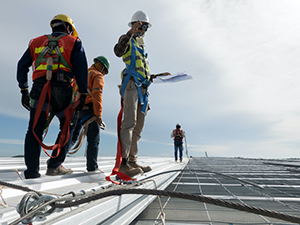
Seams and panel transitions deserve close attention because they connect separate roof components. A maintenance inspection should look for visible separation, distortion, failed sealant where sealant is part of the detail, recurring leak locations, and movement around penetrations or transitions.
Not every seam condition requires the same repair. The contractor should document what is open, loose, deteriorated, or still performing as intended, then explain whether the appropriate response is localized repair, sealant work, panel adjustment, replacement of a detail, or continued monitoring.
Fasteners Can Loosen or Corrode Over Time
Metal roof fasteners can behave differently depending on whether they are exposed or concealed and how the system is designed. Thermal movement, weather exposure, prior repairs, and substrate condition can all affect fastener performance.
A professional inspection should identify backed-out, missing, damaged, or corroded fasteners and determine whether the surrounding panel or substrate has also been affected. Simply tightening every visible fastener is not a universal repair method because the correct response depends on the fastener, panel, and condition of the attachment point.
Protective Finish and Corrosion Should Be Evaluated Separately
The finish on a metal roof helps protect the underlying metal from weathering and corrosion. Chalking, fading, surface oxidation, scratches, or localized rust can indicate different levels of wear, so appearance alone does not establish whether the panel needs coating, repair, or replacement.
Where corrosion is present, ask how deep it is, what caused it, and whether the affected metal remains structurally sound. A coating or restoration product should be recommended only after the surface condition, preparation needs, and compatibility are confirmed for the specific roof.
Drainage and Rooftop Activity Affect Metal Roof Maintenance
Debris, blocked drains, trapped moisture, and repeated rooftop traffic can accelerate wear around seams, flashing, penetrations, and low areas. Maintenance should therefore include drainage paths and areas disturbed by HVAC service, equipment work, snow removal, or other rooftop activity.
There is no single inspection schedule that fits every commercial metal roof. Roof age, panel type, leak history, exposure, traffic, previous repairs, warranty requirements, and recent weather events can all affect how often professional review makes sense.
Use Maintenance Findings to Plan the Next Step
Maintenance should produce a decision, not just a checklist. If the inspection finds isolated fastener, seam, flashing, or corrosion issues, localized repair may be appropriate. If deterioration is more widespread but the roof remains a viable restoration candidate, a coating or restoration scope may be worth evaluating. When panel damage, substrate problems, repeated leaks, or broad system failure make repair impractical, replacement may deserve consideration.
The contractor should separate confirmed findings from suspected hidden conditions and explain what evidence supports the recommendation. If moisture, deck damage, or concealed corrosion is uncertain, the proposal should state how that uncertainty will be investigated before the scope expands.
Keep a Written Metal Roof Maintenance Record
Good maintenance records make future decisions easier. Keep dated photos, leak locations, inspection findings, repair areas, materials used, and notes about corrosion, seams, fasteners, or flashing that should be rechecked later.
If a repair is completed, the closeout record should identify what was repaired and whether any nearby conditions remain under observation. That history helps building owners distinguish a new problem from an older one and reduces guesswork during the next assessment.
Metal Roofing Systems in Tiffin, OH
Cosam Contracting’s verified commercial scope includes metal roof installation and replacement, standing seam metal work, general commercial roofing, and maintenance support. The existing metal roofing information can provide additional system context, and building owners can contact Cosam Contracting or call 419-492-2201 to discuss the condition of a commercial metal roof in Tiffin.
Frequently Asked Questions
How often should a commercial metal roof be inspected?
There is no universal interval. Inspection frequency should reflect roof age, system type, leak history, rooftop activity, weather exposure, previous repairs, and applicable warranty requirements.
Do all loose fasteners need the same repair?
No. The correct repair depends on the fastener type, attachment point, panel condition, and whether the surrounding substrate or metal has also been affected.
Does surface rust mean a metal panel must be replaced?
Not always. The contractor should determine the depth, cause, and extent of corrosion before recommending cleaning, coating, localized repair, or panel replacement.
What should a metal roof maintenance record include?
Keep dated photos, inspection findings, leak locations, completed repairs, materials used, and notes about seams, fasteners, flashing, corrosion, and areas that need future monitoring.