
Commercial property owners in Delaware, OH often choose metal roofing systems for their durability, longevity, and ability to withstand a wide range of weather conditions. Over time, wear and environmental exposure can lead to leaks that threaten building operations and increase maintenance costs. Understanding why leaks develop helps building owners make better repair decisions.
In Delaware, OH, Cosam Contracting provides professional roofing solutions for commercial properties. For more information about metal roofing systems and repair options, contact (419) 492-2201.
Why Leaks Develop in Aging Metal Roofing Systems
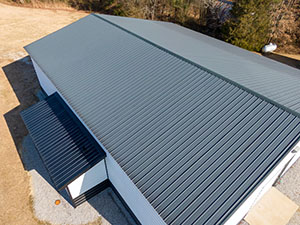
Thermal Movement and Stress
Metal expands when temperatures rise and contracts when they fall, daily and more significantly with seasonal changes. Over many years, that repeated movement stresses panels, seams, fasteners, and flashing. Connections can loosen or shift slightly, creating small gaps that become pathways for water during rain or snow.
Seam Separation
Many commercial metal roofs rely on seams to connect adjacent panels. Constant movement can gradually weaken even well-engineered seams. Once a seam separates, water can penetrate beneath the surface and travel into insulation or structural components, and because water often migrates away from the entry point, locating the actual source can be difficult without a professional inspection.
Aging Fasteners and Flashing Components
Fasteners and flashing play a critical role in maintaining the watertight integrity of metal roofing systems.
Fastener Back-Out
Many metal roofs use exposed fasteners with rubber washers to create a waterproof seal. Vibration from wind, thermal movement, and weather exposure can cause fasteners to loosen or back out over time. As they lift, the seal weakens, and even a small gap can let water into the roofing system.
Deteriorated Flashing
Flashing is installed around roof penetrations such as vents, skylights, HVAC equipment, and transitions between roof sections. These areas see constant movement and weather exposure. As flashing ages, sealants can crack, metal components can separate, and protective coatings can wear away, making flashing failures among the most common causes of leaks in aging metal roofs.
Corrosion and Protective Coating Failure
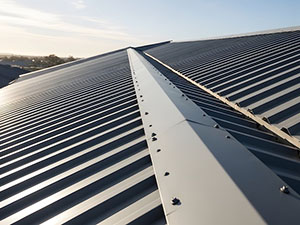
Although metal roofs are designed to resist corrosion, aging can gradually reduce their protective capabilities.
Surface Rust and Oxidation
Protective coatings shield metal panels from moisture and environmental contaminants. As coatings wear down, sections of the roof can become exposed to oxidation. Rust can weaken metal panels and create small openings that allow water penetration; left untreated, corrosion can spread and compromise larger areas of the roof.
Ponding Water and Drainage Issues
Poor drainage accelerates corrosion and leak development. Water that sits on the roof surface for extended periods increases the likelihood of coating breakdown and metal deterioration, so drainage systems, gutters, downspouts, and low-slope areas are worth close attention.
Surface Symptoms vs. Substrate Condition
What’s visible on top of a roof, rust staining, a worn coating, a small gap at a fastener, doesn’t always reveal what’s happening underneath. A panel with only light surface rust can still be sound, while a similar-looking panel could already have moisture trapped in the insulation or deck below.
This distinction matters for repairs. Resealing a fastener or spot-coating rust addresses the surface but doesn’t confirm whether water has already reached the substrate. Where interior staining, recurring leaks in the same spot, or visible sagging suggest it has, we check the substrate directly rather than assuming the surface fix solved the problem.
How Inspection Findings Shape the Roof Repair Plan
What we find during an inspection determines what we recommend:
- Isolated fastener back-out with no evidence of deeper moisture: repair may involve resecuring or replacing the fastener and restoring the seal, depending on surrounding conditions.
- Seam separation limited to one section: repair can often stay localized if the surrounding roof remains serviceable.
- Surface-level rust with the panel still serviceable: treatment may include cleaning, corrosion preparation, and a compatible protective approach.
- Corrosion through the panel, or moisture that has reached insulation or the deck: the scope may need to go beyond surface treatment because coating or resealing cannot reverse underlying damage.
What an Inspection Can and Can’t Tell You
A visual inspection is good at identifying loose fasteners, separated seams, visible corrosion, and drainage problems, and at narrowing down likely leak sources. It doesn’t always reveal the full extent of trapped moisture or substrate damage without additional steps, like moisture testing or opening a section to look underneath. Where the visible evidence suggests more than a surface issue, we recommend that testing rather than guessing at what a coating alone can fix.
Reliable Metal Roofing Systems
For commercial property owners in Delaware, OH, understanding why leaks develop in aging metal roofing systems, and how inspection findings translate into the right repair, is essential for long-term building protection. Expansion and contraction, fastener movement, flashing deterioration, corrosion, and drainage problems can all contribute to leaks as roofs age. Recognizing these issues early and using preventative maintenance can help owners document changing conditions and address problems before they become broader repair decisions.
If you own a commercial property in Delaware, OH and want expert guidance on maintaining or repairing metal roofing systems, Cosam Contracting can help. Contact Cosam Contracting today at (419) 492-2201 to discuss your roofing needs and schedule a professional evaluation.
Frequently Asked Questions
What is the most common cause of leaks in aging metal roofing systems?
Loose fasteners, seam separation, and deteriorated flashing are among the most common causes of leaks.
Can rust cause a metal roof to leak?
Yes. Corrosion can weaken metal panels and create openings that allow water to penetrate the roofing system, especially once it progresses past the surface layer.
Are leaks always visible directly below the damaged area?
No. Water can travel beneath roofing materials before becoming visible inside the building, which is part of why locating the actual source usually needs a professional inspection.
Can a visual inspection tell you everything about a roof’s condition?
Not entirely. It identifies surface-level issues and likely leak sources well, but confirming trapped moisture or substrate damage sometimes needs additional steps, like moisture testing.