
A coating can protect a commercial roof from sun, rain, and temperature swings, but only if the roof underneath is a good candidate. Putting a coating over wet insulation, a rotted deck, or a roof that cannot drain will not fix those problems. Cosam Contracting provides acrylic and silicone coatings and roof restoration for commercial and industrial buildings across Ohio and Kentucky, and this page explains what weather-resistant coatings do, when a roof is a sound candidate, and what a coating project should include. To talk through your roof, call (419) 492-2201 for Central and Northern Ohio or (740) 776-7777 for Southern Ohio and Kentucky.
The Importance of Weather-Resistant Commercial Coatings
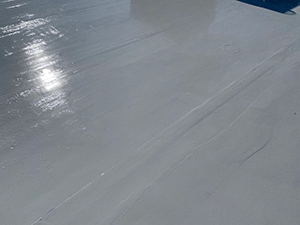
Commercial roofs are exposed to rain, snow, hail, wind, freezing and thawing, and ultraviolet light year after year. Over time that exposure wears down the roof surface. A roof coating adds a protective layer over a sound roof, helps seal minor surface wear, and can slow further weathering. It is a restoration option, which means it works best when the roof is aging but still fundamentally sound. How long a coating lasts depends on the product, the condition of the roof, the preparation, and the weather it faces, so any lifespan figure should be tied to a specific roof and a written product description.
Benefits of Weather-Resistant Roof Coatings
- Added protection: A coating adds a layer over the existing surface that helps shield it from sun, rain, and temperature changes.
- Reflectivity: Reflective coatings can reduce the heat a roof absorbs. How much that affects cooling costs depends on the building, the roof, and how it is cooled, so treat energy savings as a possible benefit and not a fixed number.
- Sealing minor surface wear: Coatings can help seal small cracks and worn spots in a sound surface. They do not repair large openings, failed seams, or damaged flashing, which need to be repaired first.
- UV protection: A coating can limit the damage that ultraviolet light does to the roof surface over time.
- Less disruption than replacement: Restoration usually means less tear-off and debris than replacement, when the roof is a suitable candidate.
Is My Roof a Sound Candidate for Coating?
The answer depends on the condition of the roof, not on the coating. Use the table below to see how common conditions point toward coating, repair first, or replacement. An inspection is what confirms which one applies to your building.
| Condition | What to Confirm | What It Suggests |
|---|---|---|
| Moisture in the roof system | Whether insulation or decking is wet | Wet or saturated insulation needs to be replaced before any coating is considered |
| Surface adhesion | Whether the existing surface is clean, firmly attached, and able to hold a coating | A loose or failing surface needs to be repaired or removed before coating |
| Substrate and deck condition | Soft, rusted, or deteriorated areas | Damaged decking points toward repair or replacement, not coating |
| Drainage and ponding | Whether water stands on the roof after rain | A coating does not correct a drainage defect, so the cause has to be addressed separately |
| Seams, flashing, and penetrations | Open seams, gaps, or failed seals | These are repaired first, then the area is coated |
| Compatibility | Whether the coating works with the existing roof material | An incompatible pairing can fail, so the product should be matched to the roof |
If the problems are isolated, a targeted leak repair may be all that is needed. If the roof is worn out across most of its surface, roof replacement is more likely the right path.
Choosing the Right Coating
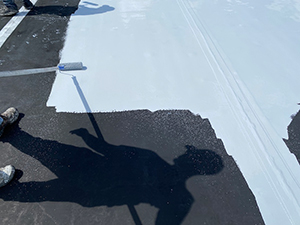
The right coating depends on the roof style, the roofing material underneath, local weather, and what you need the roof to do. Cosam Contracting works with acrylic and silicone coating systems. In general, silicone is often considered where ponding water is a concern, and acrylic is a common choice for reflective, weather-resistant protection, but the right fit depends on the roof. Ask for the product to be named in the proposal, along with how it is applied and what the roof surface needs before it goes on. Be cautious about any promise of a guaranteed lifespan or guaranteed savings.
Our Process
A coating project is only as good as the work done before the coating goes on. Our process starts with a survey of your roof to find existing problems, which are then addressed. The surface is cleaned and prepared so the coating bonds properly, and the coating is applied in an even layer across the roof to form a continuous protective surface. A well-run project also includes:
- Repairs first: open seams, damaged flashing, and failed seals are corrected before coating.
- Surface preparation: the roof is cleaned and treated for bonding.
- Application check: the coating is applied evenly, and the finished surface is reviewed for coverage and problem spots.
- Follow-up: a later inspection confirms how the coating is holding up, and a maintenance schedule keeps small issues from growing.
For more on what a maintenance schedule includes, see our roof maintenance page, and a regular roof inspection shows when a coated roof needs attention.
Talk With Us About Your Roof
If you are weighing restoration for your commercial building, we can inspect the roof and explain whether coating, repair, or replacement fits. Contact us or call (419) 492-2201 for Central and Northern Ohio, or (740) 776-7777 for Southern Ohio and Kentucky.
Frequently Asked Questions
Can any commercial roof be coated?
No. The roof needs to be dry, sound, and compatible with the coating. Wet insulation, damaged decking, and failing surfaces need to be dealt with first.
Will a coating stop ponding water?
No. A coating does not correct a drainage defect. The cause of the ponding has to be addressed separately.
How long does a roof coating last?
It depends on the product, the roof’s condition, the preparation, and the weather. Ask for any lifespan or warranty terms in writing for your specific roof.
What is the difference between silicone and acrylic coatings?
They are different products suited to different roof conditions. We can recommend one after inspecting your roof.