
A commercial roof inspection gives a Grove City, OH facility owner a documented look at current roof conditions before deciding whether maintenance, repair, or further investigation is needed. The process should evaluate the complete roof system rather than focus only on the first visible symptom.
Cosam Contracting provides commercial and industrial roof inspection services across Ohio. Facility owners can call (419) 492-2201 to discuss the reason for the inspection, known problem areas, roof access, and any records that may help the evaluation.
What Can Prompt a Commercial Roof Inspection?
An inspection may be scheduled as part of routine maintenance, after severe weather, when a leak or stain appears, before a planned roofing project, or when a property owner needs a clearer baseline for future budgeting. A change in ownership or tenancy can also prompt a condition review.
The purpose should be clear before the visit. A routine condition inspection, a leak investigation, and a storm-related assessment may overlap, but each can require a different level of documentation or follow-up.
How to Prepare Before the Inspection
Facility staff can make the visit more efficient by confirming safe roof access and identifying known interior symptoms, prior leak locations, recent repairs, drainage concerns, or rooftop equipment work. If available, previous roof reports, repair records, warranty documents, or roof plans can provide useful history.
You do not need to diagnose the roof before the contractor arrives. The goal is to provide context so the inspection can connect visible roof conditions with what has been happening inside or around the building.
What the Roof Inspection Should Cover
A commercial inspection should review the roof surface or membrane, seams, flashing, penetrations, roof edges, previous repairs, drains, scuppers, gutters, and visible conditions around rooftop equipment. The inspector should also note punctures, open details, loose components, deterioration, debris, or other conditions that may need attention.
Cosam Contracting’s Commercial Roof Inspections page describes several inspection purposes, including regularly scheduled reviews and assessments tied to specific roofing concerns.
Drainage Conditions Need More Than a Quick Look
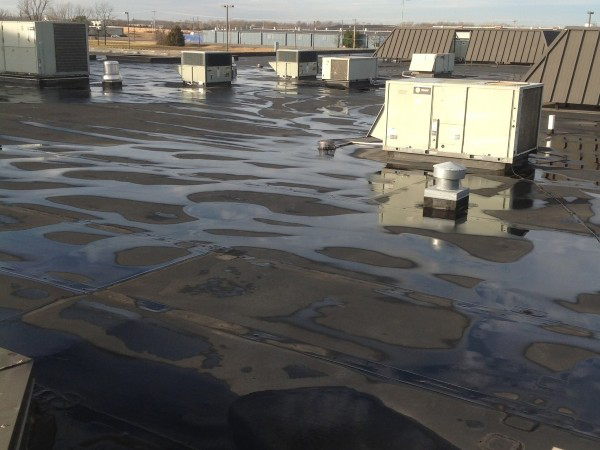
Standing water or recurring overflow can point to blocked drains, low areas, settlement, roof geometry, damaged components, or another drainage issue. The inspection should document what is visible and identify whether cleaning, repair, or additional investigation is needed.
A roof inspection should not assume that every ponding area has the same cause. If drainage appears to be contributing to roof deterioration, the report should separate the observed symptom from the recommended corrective work.
What About Hidden Moisture?
A visual roof inspection can identify many important conditions, but it does not always reveal moisture below the surface. If the roof history, leak pattern, or visible conditions suggest concealed moisture, the contractor should explain whether additional diagnostic work is appropriate.
The report should distinguish confirmed findings from suspected conditions. That helps the facility owner understand what is known from the inspection and what would require further testing before a repair or replacement scope is finalized.
What Should You Receive After the Inspection?
A useful inspection record should identify the areas reviewed, observed conditions, photographs where helpful, maintenance items, repair recommendations, unresolved concerns, and any follow-up that may be needed. The findings should be specific enough to create a baseline for later comparison.
If repair work is recommended, the inspection report and the repair proposal should remain distinct. The inspection documents condition; the proposal defines the work and cost needed to address selected findings.
How Often Should a Commercial Roof Be Inspected?
There is no universal schedule that fits every commercial roof. Roof type, age, condition, warranty terms, drainage history, rooftop traffic, previous leaks, severe weather, and the building’s operational importance can all affect inspection frequency.
Cosam’s commercial roof maintenance article explains how inspection findings can support a maintenance plan. The right cadence should be adjusted as the roof condition and building needs change rather than treated as a fixed twice-yearly rule.
How Long Does an Inspection Take?
Inspection time depends on roof size, access, complexity, equipment, the number of roof sections, and the reason for the visit. A focused review of one reported leak is different from a condition assessment of a large multi-section facility.
Facility managers should ask what areas will be reviewed and what documentation will be provided instead of relying on a generic time estimate.
Commercial Roof Inspections in Grove City, OH
For a Grove City facility owner, the most useful inspection is one that connects roof conditions to practical next steps without turning every finding into a major project. A sound roof may simply need monitoring or maintenance, while localized defects may support repair and broader deterioration may call for additional evaluation.
Call Cosam Contracting at (419) 492-2201 to discuss a commercial roof inspection for your Grove City property.
Frequently Asked Questions
Do I need to be present during a commercial roof inspection?
Not always. The contractor mainly needs safe access and enough building history to understand known problem areas, although a facility contact should be available if questions come up.
What happens if the inspection finds a problem?
The findings should explain the condition, where it was observed, and whether maintenance, repair, or additional investigation is recommended before the owner decides how to proceed.
Is a roof inspection the same as an insurance inspection?
No. A roofing contractor can document roof condition and visible damage, while an insurer applies the policy terms and makes coverage and payment decisions.
Can an inspection find every hidden roof problem?
No. Visual inspection can identify many conditions, but suspected concealed moisture or deck problems may require additional diagnostic work before the full extent is known.