
Choosing a metal roofing system is more than choosing a metal. The panel design, how it is fastened, how it handles movement, and how the details are flashed all affect how the roof performs and what it costs to maintain. Cosam Contracting installs metal roofing on commercial and industrial buildings across Ohio and Kentucky.
For an owner planning a roof installation or replacement, the first decisions are the roof slope, existing deck and framing, water drainage, expected rooftop access, and whether the proposed fastener layout works with the chosen panel. Those conditions help distinguish a suitable specification from a product chosen mainly for appearance or initial price. This guide explains the installation steps, main cost factors and questions to put in a written specification. To discuss your commercial building, call (419) 492-2201 in Central and Northern Ohio or (740) 776-7777 in Southern Ohio and Kentucky.
Metal Roofing Systems Installation
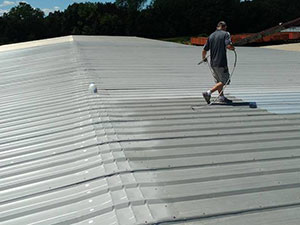
A successful installation follows a set sequence, and each step affects the next.
- Evaluation: We begin with a thorough evaluation of the existing roof and structure. We take exact measurements and determine whether any structural repairs are needed.
- Preparation: The roof surface is cleaned and old materials are removed where the project calls for it. Any necessary structural repairs are completed to give the new roof a solid foundation.
- Underlayment: An underlayment suited to the system is installed to help protect against moisture.
- Panels and details: Install panels in the sequence required by the selected manufacturer and roof geometry. Include closures, trim, and flashing at edges, penetrations, and transitions.
The details matter most where the roof changes plane or is penetrated. Flashing, closures, and sealants at those points are where leaks tend to start, so ask how they will be handled in your building.
Exposed or Concealed Fasteners: What Changes
Metal roofing systems generally fall into two fastening approaches. Standing seam panels use concealed fasteners, with raised vertical seams that join the panels. Other panel types are fastened through the face of the panel with exposed fasteners. The table below compares the two as general guidance. The right choice for your building depends on the roof and the specification.
| Consideration | Concealed Fastener (Standing Seam) | Exposed Fastener |
|---|---|---|
| Movement | Panels are attached in a way that can allow for thermal expansion and contraction, depending on the clip design | Fasteners pass through the panel, so movement over time can loosen them or wear their seals |
| Roof geometry | Raised seams help shed water and snow; suits many low-slope and complex roofs when detailed correctly | Generally suited to simpler, steeper roof forms; slope requirements should be confirmed |
| Fastening and flashing | Fewer penetrations through the panel face; flashing details at seams, edges, and curbs need care | Many penetrations through the panel face, each a possible leak point |
| Substrate | Needs a sound, even surface or framing that suits the clips | Needs sound framing or decking to hold the fasteners |
| Maintenance access | Fewer fasteners to check, but seams, flashing, and sealants still need regular inspection | Fasteners and seals need periodic checking and may need replacement |
For either approach, the manufacturer’s minimum slope, seam design, local wind-uplift requirements, corrosion exposure, and attachment to the actual supporting structure need to be verified. A standing seam label does not by itself establish that a system is appropriate for a nearly flat roof, and an exposed-fastener design is not automatically wrong for every commercial property.
Cost Considerations
There is no single price for a metal roof, and the final cost depends on the specific project. These are the factors that move it most.
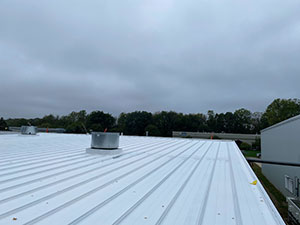
- Metal, thickness and finish: Steel and aluminum differ in weight, corrosion behavior and cost. Specify panel metal, nominal thickness or gauge, coating and finish. Material prices and installed costs depend on the chosen system and project conditions.
- Size and complexity: Larger roofs need more labor and material, and roofs with many angles, curbs, or penetrations add installation time.
- Insulation and underlayment: The choices here affect both the initial price and how the roof performs, and they should be written into the specification.
- Labor and access: Slope, access, deck preparation, trim, and flashing all influence the labor involved.
- Coatings: Some projects include a protective or reflective coating. Any energy savings depend on the building and should be treated as a possible benefit, not a promise.
- Maintenance and warranty: Ongoing maintenance helps a roof last, and warranty terms vary. Get materials and workmanship warranties in writing and read the conditions.
Hiring a qualified installer matters because flashing, trim and fastening details affect roof performance. For an overview of larger projects, see Cosam’s roof replacement service.
Questions for a Written System Specification
Before you sign, ask that the proposal answer these questions in writing:
- Which panel system is proposed, and is it concealed-fastener or exposed-fastener?
- What metal, gauge, and finish are specified?
- How does the system allow for thermal movement?
- How are flashing, edges, curbs, and penetrations detailed?
- What underlayment and insulation are included?
- What happens if rotted decking or structural damage is found?
- What warranties apply to materials and workmanship, and what maintenance do they require?
Discuss a Commercial Metal Roofing System
If you are considering a metal roof for a commercial building, Cosam Contracting can inspect the existing roof and discuss a system and scope that fit. Contact us or call (419) 492-2201 in Central and Northern Ohio, or (740) 776-7777 in Southern Ohio and Kentucky.
Frequently Asked Questions
What is the difference between exposed-fastener and concealed-fastener metal roofing?
Concealed-fastener systems such as standing seam hide the fasteners under raised seams. Exposed-fastener panels are fastened through the face of the panel, so the fasteners and their seals need periodic checking.
What affects the cost of a metal roof?
The metal and gauge, roof size and complexity, insulation and underlayment, labor and access, any coating, and the warranty and maintenance terms.
Does a metal roof need maintenance?
Yes. Seams, flashing, sealants, and fasteners should be inspected regularly, and drainage kept clear.
What should a metal roofing proposal include?
The panel system, metal, gauge, and finish, how movement and flashing are handled, what underlayment and insulation are used, and the warranty terms in writing.