
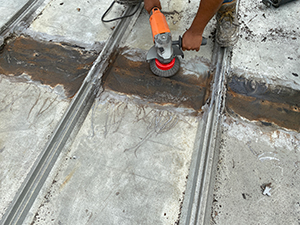
A commercial metal roof in Mansfield, OH should be repaired according to the specific defect, panel system, and surrounding roof condition. Corrosion, loose fasteners, seam failure, damaged flashing, and panel movement do not all call for the same treatment. Cosam Contracting provides metal roof repair for commercial properties in Mansfield. Call (419) 492-2201 to discuss the roof condition.
About Metal Roof Repair
Repairing a metal roof requires more than applying a generic patch. The repair method should follow the panel type, finish, fastener system, seam configuration, flashing details, and the condition of the surrounding metal. A useful repair assessment starts by identifying what has actually failed before selecting materials or treatment.
What Is Actually Wrong With the Metal Roof?
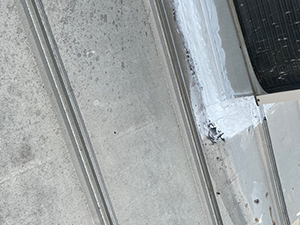
Different metal-roof problems require different responses. The table below separates several common conditions so the repair scope can match the actual issue rather than follow one universal clean, sand, and coat sequence.
| Issue | What May Be Happening | What the Repair Should Address |
|---|---|---|
| Corrosion or rust | The protective finish has deteriorated or the metal has been exposed at a scratch, cut edge, fastener, or another vulnerable area. | Determine how far the corrosion extends and whether the panel remains serviceable. Surface treatment should use products compatible with the existing metal and finish. |
| Loose or failed fasteners | Fasteners may have backed out, seals may have deteriorated, or surrounding metal may no longer hold the fastener correctly. | Confirm the fastener, seal, panel hole, and surrounding metal condition before deciding whether replacement, resealing, or a broader repair is appropriate. |
| Seam failure | A standing seam or lap seam may have opened, shifted, or lost part of its weather seal. | Use a seam repair method compatible with the panel system and determine whether movement or surrounding damage also needs correction. |
| Penetration or flashing problem | Flashing around vents, curbs, walls, or rooftop equipment may have separated, cracked, or lost its seal. | Repair or rebuild the affected detail so it sheds water correctly instead of relying on a surface coating or sealant alone. |
| Panel movement | Temperature changes can make metal panels expand and contract, which can contribute to stress at fasteners, seams, and transitions. | Check how the panel is attached and whether the repair allows for the movement expected in that roof system. |
A coating can be useful for some serviceable metal roofs, including certain surface-corrosion or restoration situations, but it should not be treated as a substitute for repairing a failed seam, loose fastener, damaged flashing, perforated panel, or another underlying defect.
Why Compatible Repair Materials Matter
Repair materials should be compatible with the existing panel material, finish, sealants, fasteners, and any restoration system already present. Mixing incompatible metals can contribute to galvanic corrosion where the materials meet. A sealant, coating, or fastener that does not suit the existing system can also create adhesion or service problems.
Where manufacturer or system requirements apply, the proposed repair should be checked against those written requirements before work begins. That is more reliable than assuming one product is appropriate for every metal roof. If warranty or product coverage is relevant to the project, the applicable written terms should be reviewed rather than inferred from the roof type alone.
The Need for a Specialist
Commercial roofing systems use different materials, attachments, seams, and flashing details. Metal roofing adds another consideration because the panels and fasteners respond to temperature changes and because repair materials can interact with the existing metal and finish.
A professional metal-roof assessment should identify the visible defect, inspect the surrounding area, and determine whether the issue is isolated or part of a broader pattern. One loose fastener may support a localized repair when the surrounding panel remains sound. Repeated fastener failures, widespread corrosion, open seams in several areas, or damage extending through the panel can justify a broader evaluation.
The purpose of the inspection is not to guarantee that every concealed condition will be found from the surface. It is to define the known problem, identify the important surrounding conditions, and determine whether additional investigation is needed before the final repair scope is set.
Repair Scope and Follow-Up
Before work starts, the written scope should identify the area being repaired, the defect being addressed, the materials or method being used, and any known limits or exclusions. If concealed deterioration or a wider problem becomes apparent during the work, that added condition should be evaluated separately instead of being assumed to be part of the original repair.
After the repair, future inspection needs depend on the roof condition, exposure, repair type, and any applicable product or project guidance. A repaired area should still be monitored along with surrounding seams, fasteners, flashing, and drainage because a successful localized repair does not guarantee that unrelated areas of the roof will remain unchanged.
Metal Roof Repair in Mansfield, OH
For commercial metal roof repair in Mansfield, OH, Cosam Contracting can evaluate the problem and discuss whether the appropriate next step is a localized repair, broader restoration assessment, or another roofing scope. Please give us a call at (419) 492-2201.
Frequently Asked Questions
Is a protective coating always the right fix for a damaged metal roof?
No. A coating may help protect some serviceable metal roofs, but it does not correct a failed fastener, open seam, damaged flashing, perforated panel, or another underlying defect by itself.
Why do repair materials need to match the existing metal roof system?
Different metals, finishes, fasteners, sealants, and coatings can interact differently. Compatible materials help reduce the risk of adhesion problems, galvanic corrosion, or a repair that does not suit the existing system.
Can panel movement contribute to metal-roof problems?
Yes. Metal expands and contracts with temperature changes, and that movement can contribute to stress at fasteners, seams, panel ends, and transitions. The repair should account for the way the specific system is designed to move.
How do I know whether a metal roof needs a localized repair or broader work?
Look at the extent of the defect and the condition around it. One isolated fastener, seam, or flashing issue may support a targeted repair, while repeated failures, widespread corrosion, or deterioration through multiple areas can justify a broader assessment.