
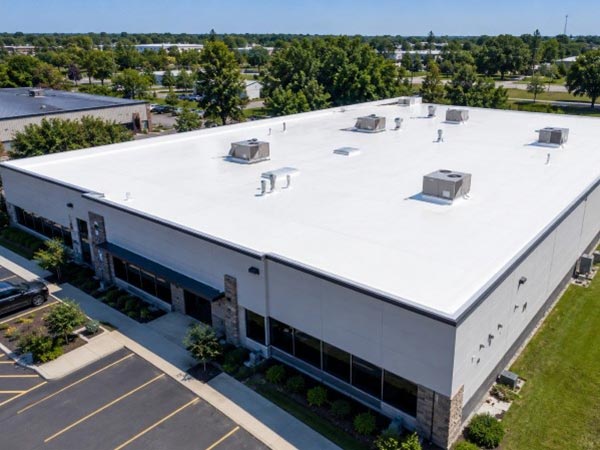
For a commercial flat roof in Chillicothe, OH, one key question is whether a new roofing system can be installed over the existing assembly or whether removal is needed first. Re-roofing places a new layer of protection over an existing roofing system, but suitability depends on moisture, deck and insulation condition, existing layers, attachment requirements, drainage, compatibility, and the selected system.
Cosam Contracting evaluates the roof before the replacement scope is set. For a roof assessment in Chillicothe, call (740) 776-7777.
Re-Roofing and Tear-Off Replacement: What Is the Difference?
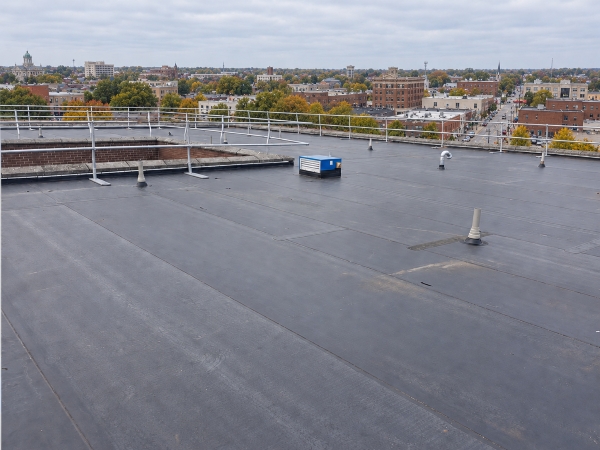
Re-roofing, sometimes called a recover, leaves part or all of the existing roof assembly in place and adds a new system above it when the conditions and selected roofing system allow. Tear-off replacement removes existing roofing materials to the level required by the project before the new roof is installed. Flat and low-slope commercial roofs may use single-ply membranes such as TPO, PVC, or EPDM, depending on the building and system design.
The condition of the existing assembly is a major limit on re-roofing. Significant moisture, deterioration, incompatible materials, structural concerns, or other underlying conditions can make removal the more appropriate scope.
Conditions That Decide Between Re-Roofing and Tear-Off
The table below shows how common findings push a project one way or the other. Your own roof may show a mix, and an inspection decides.
| Condition | Re-Roofing May Fit | Tear-Off Usually Fits |
|---|---|---|
| Insulation and deck | Moisture and deck conditions are understood and remain suitable for the proposed recover system | Moisture, insulation, or deck deterioration is broad enough that affected materials need removal or replacement |
| Existing membrane | Localized defects can be repaired and the existing assembly remains suitable for the proposed system | Broad membrane deterioration, delamination, repeated failures, or incompatible existing materials limit a reliable recover |
| Number of existing layers | Existing layers and assembly thickness comply with applicable code and the selected roofing system | Existing layers, code, system requirements, or attachment conditions do not permit another recover layer |
| Leak history | Leaks are localized and the surrounding roof remains suitable after repair | Leaks recur in multiple areas or moisture findings show a broader condition than localized repair can address |
| Roof structure | Structure and deck can support the selected assembly and attachment method | Structural or deck conditions require repair, replacement, or further evaluation before a new assembly is installed |
| Drainage and slope | Drainage conditions can be addressed within the proposed recover scope | Drainage, slope, or deck conditions require corrective work beyond what the proposed recover assembly includes |
| Business disruption | Recover may reduce removal work, but actual disruption depends on access, staging, attachment, weather, and building operations | Tear-off requires removal and disposal planning, with disruption depending on staging, access, safety controls, and building operations |
Why an Inspection Comes First
Surface appearance alone does not establish the condition of the full roof assembly. A roof inspection can document the membrane, seams, flashing, drainage, prior repairs, and other conditions that affect whether re-roofing, tear-off, repair, or restoration should be compared. Moisture investigation or additional testing may be needed when concealed conditions are suspected. The evaluation may also identify a less invasive option, such as repair or a roof coating, when the existing roof remains a suitable base for that scope.
What Tear-Off Replacement Involves
When removal is part of the scope, Cosam’s roof replacement page describes a six-step process:
- Consultation: a conversation about your needs, options, and budget.
- Inspection: an inspection to evaluate the roof condition and available scope options.
- Timing: scheduling and coordination around the building’s access and operating needs.
- Tear-off: removal of roofing materials included in the approved replacement scope, with site safety and debris handling.
- Construction: installation of the new roof.
- Clean-up: completion of the cleanup responsibilities included in the project scope.
Questions to Settle Before Choosing a Path
A written proposal should make the decision easy to follow. Ask these questions before approving either option:
- What did the inspection find in the insulation and deck, and how was it checked?
- If re-roofing is proposed, what existing layers will remain, and does the resulting assembly comply with applicable code and the selected roofing system?
- If tear-off is proposed, how will concealed moisture, insulation, or deck deterioration be documented, priced, and approved if it is found during removal?
- Which membrane or system is proposed, and how will edges, curbs, penetrations, and drains be detailed?
- How will weather protection, access, staging, and building operations be handled during the work?
If a warranty is offered, rely on the actual written document for coverage, exclusions, maintenance responsibilities, and inspection requirements. After the new roof is in place, regular roof maintenance helps catch small problems early.
Flat Roof Replacement in Chillicothe, OH
Chillicothe is in Ross County, and commercial roofs in the area can be exposed to snow, rain, temperature changes, and seasonal weather. For a local commercial building, the roof evaluation should determine whether re-roofing, tear-off replacement, repair, or restoration best fits the existing conditions and selected system. See our Chillicothe roofing services page or call (740) 776-7777.
Frequently Asked Questions
Can a new flat roof go over an old one? Sometimes. Re-roofing may be possible when moisture, deck and insulation condition, existing layers, compatibility, attachment requirements, code, and the selected roofing system support another assembly.
When is tear-off replacement necessary? Tear-off may be needed when moisture or deterioration is widespread, the deck requires repair, existing layers or code prevent another recover, or the roof assembly is not a suitable base for the selected system.
What single-ply systems are used on commercial flat roofs? PVC, TPO, and EPDM are common single-ply membrane options. The choice depends on the roof assembly, attachment design, drainage, rooftop exposure, compatibility, and project goals.
Will a roof project disrupt my business? Disruption depends on access, staging, removal scope, attachment method, weather, rooftop equipment, safety controls, and building operations. Those coordination details should be addressed in the written proposal.