
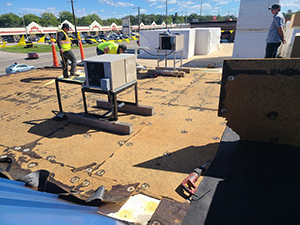
A commercial roof repair assessment in Norwalk, OH should do more than identify where water became visible inside the building. The useful goal is to connect the symptom to roof-side evidence, determine whether the problem is localized or part of a broader condition, and define what the repair scope includes before work begins. Cosam Contracting serves Norwalk and other Central and Northern Ohio markets. Call (419) 492-2201 to discuss a commercial roof concern.
What a Commercial Roof Repair Assessment Should Document
Water can travel within a roof assembly before it appears at a ceiling, wall, or interior penetration. That means the location of an interior stain is evidence of a problem, but not proof of the exact entry point or the full moisture extent. The assessment should compare interior symptoms with roof conditions such as seams, flashing, penetrations, drainage, rooftop equipment interfaces, visible membrane damage, and previous repairs.
Cosam’s commercial roof maintenance information for Norwalk discusses seams, flashing, penetrations, drainage, and moisture diagnostics as roof-condition evidence. A repair assessment should use the level of investigation needed for the actual condition rather than assume every leak requires the same process.
| Observed Condition | Evidence to Check | What It Means for Scope |
|---|---|---|
| Interior stain or active leak | Likely roof-side entry points, nearby seams and flashing, repair history, and whether additional moisture investigation is warranted. | The stain alone does not establish the repair size. Uncertain moisture can require more investigation. |
| Separated seam or failed fastener area | Length and location of the defect, nearby attachment, surrounding material condition, and signs of repeated failure. | One contained defect may support localized repair, while repeated failures can justify broader assessment. |
| Leak near a curb, vent, or penetration | Flashing transitions, seals, attachment, nearby membrane condition, and evidence of water entry around the detail. | A single failed detail may be repairable if surrounding roofing remains serviceable. |
| Puncture or membrane damage | Size and depth of the defect, surrounding material, nearby equipment or traffic areas, and whether damage extends below the surface. | Localized damage can support targeted repair, but broader deterioration changes the decision. |
Common Causes of Commercial Roof Damage
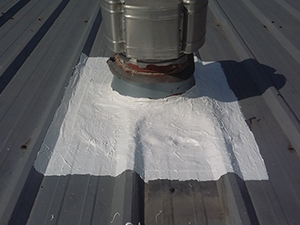
Weather exposure, rooftop traffic, aging materials, drainage problems, and work around HVAC units or other penetrations can all contribute to roof damage. These factors help direct the inspection, but they are not diagnoses by themselves. The repair recommendation should explain which condition was actually found and why the proposed method fits it.
Localized Repair vs. a Broader Assessment
A localized repair is more reasonable when the defect has a clear cause, the affected area is limited, and the surrounding roof remains serviceable. A broader assessment becomes more important when leaks recur, several unrelated areas show similar deterioration, moisture extent is uncertain, or previous patches have not resolved the same problem.
Cosam’s commercial roof repair guidance also emphasizes finding the source of the problem before selecting a repair. The Norwalk assessment should preserve that distinction between a contained repair and conditions that need a wider scope.
Temporary Protection Before Permanent Repair
Weather, material availability, access, or the need for additional investigation can sometimes delay permanent repair. If temporary protection is needed, the written response plan should identify what measure is being used, who installs it, who monitors it, what conditions require reinforcement, and when it will be removed or replaced by the permanent work. Temporary protection should be documented as an interim measure, not treated as proof that the underlying defect has been repaired.
Access Planning and Business Operations
Commercial roof work should be planned around safe roof access, staging, entrances, rooftop equipment, areas below the repair, and building operations. The contractor and facility representative should identify sensitive work areas, operating hours, tenant or employee concerns, and any access restrictions before repair starts. Cosam’s Norwalk service page confirms commercial roofing support for the local market and the Central/Northern Ohio contact number used here.
What the Repair Quote Should Include
A written repair quote should identify the repair area, observed condition, proposed materials or method, preparation, access needs, important exclusions, and how concealed conditions will be documented and approved if the scope changes. It should also make clear whether nearby seams, flashing, drainage details, cleanup, temporary protection, or follow-up verification are included.
Verified Completion
Completion should be checked against the approved scope rather than assumed because the work area looks finished. Review repaired seams, flashing, penetrations, patches, drainage-related items included in the job, cleanup, and any agreed follow-up. If the repair revealed a condition outside the original scope, that change should be documented separately instead of being folded into the job without explanation.
Commercial Roof Repair in Norwalk, OH
Cosam Contracting serves commercial properties in Norwalk and Central/Northern Ohio. If your facility has a leak, damaged detail, or recurring roof problem, call (419) 492-2201 to discuss an assessment and the evidence needed to define the repair scope.
Frequently Asked Questions
Can an interior stain show exactly where a commercial roof is leaking?
No. It shows where moisture became visible inside, but the roof-side entry point and moisture extent still need to be investigated.
When is a localized commercial roof repair appropriate?
It is more appropriate when the defect has a clear cause, the affected area is limited, and surrounding roofing remains serviceable.
What should temporary roof protection include?
The response plan should identify the temporary measure, who installs and monitors it, what triggers reinforcement, and when permanent repair will replace it.
How should a commercial roof repair be verified at completion?
Compare the finished work with the approved scope, including repaired details, cleanup, included drainage work, and any documented changes discovered during the job.