
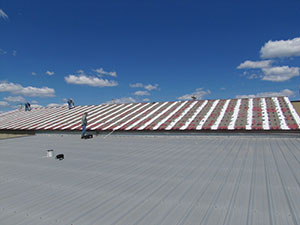
At Cosam Contracting, we help commercial and industrial property owners in Mansfield, OH decide whether metal roof restoration is the right fit for an aging roof system. Metal roofs are built for long-term service, but sun exposure, moisture, and normal wear can still lead to rust, seam separation, loose fasteners, and coating breakdown. Restoration can renew the roof’s protective surface, treat surface corrosion, and reseal problem areas when the underlying panels remain sound. It is not a substitute for structural repair, so our team starts with a hands-on inspection before recommending a restoration scope. Call us at 419-492-2201 to schedule an assessment of your building’s roof.
Signs Your Commercial Metal Roof May Need Restoration
Knowing when to schedule maintenance on a commercial metal roof helps protect the building underneath and can keep small problems from becoming larger ones. Warning signs that deserve professional evaluation include:
- Recurring leaks, especially after heavy rain, that may trace back to cracked sealant, worn seams, or damaged flashing
- Visible surface rust or a chalky, faded coating that is no longer protecting the metal as intended
- Loose, dented, or displaced panels that no longer form a tight, continuous surface
- Missing, loose, or rusted fasteners that allow movement and create potential leak points
- Debris buildup in valleys or around penetrations that holds moisture against the roof
- Repeated repairs in the same areas, suggesting the roof needs a broader condition assessment
Any one of these issues may call for a localized repair rather than a full restoration. When several appear together, a roof-wide evaluation can show whether restoration is still appropriate or whether damaged sections need more extensive repair or replacement.
How We Assess Corrosion and Seam Condition
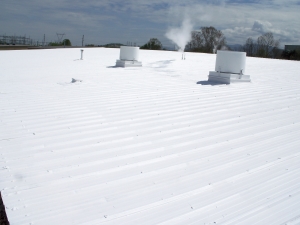
Before recommending a restoration plan, our crew checks the condition of the panels, seams, flashing, and fasteners up close. That inspection includes:
- Determining whether corrosion is limited to the coating and surface or has progressed into the metal panel
- Checking seams and laps for separation, movement, or failed sealant that could allow water beneath the panels
- Looking for thinning, holes, damaged edges, or other areas that need repair before any coating is considered
- Reviewing fastener backout, panel movement, and locations where previous repairs have failed
Coatings and sealants used in restoration can address surface deterioration, reinforce weatherproofing at seams and fasteners, and renew the roof’s protective surface. They do not restore load-bearing strength to metal that has already thinned, perforated, or otherwise lost structural integrity. That distinction is central to deciding whether restoration is a suitable option.
When Restoration Fits, and When Replacement Is the Better Call
Restoration generally fits best when corrosion is mainly surface-level, the panels remain structurally sound, and seam or fastener problems are limited enough to repair before coating. In that situation, restoration can be a more targeted way to extend the usable life of the existing roof without replacing sound material unnecessarily.
Replacement becomes the stronger option when corrosion has gone through the metal in multiple areas, panel damage is widespread, seams or fasteners have failed extensively, or repeated repairs have not controlled recurring leaks. An inspection should also consider any substrate or deck concerns beneath the visible metal roof. If the system needs more than surface preparation, localized repairs, and renewed weatherproofing, we will recommend the more appropriate repair or replacement scope instead of coating over a deeper problem.
What to Expect During the Restoration Process
The restoration sequence depends on the roof’s condition, size, access, and the repairs required before coating. Work typically begins with cleaning and surface preparation so rust, debris, failing material, and other contaminants do not interfere with the new protective system. Seams, fasteners, flashing, and damaged areas are then addressed as needed before the restoration coating or sealant is applied.
Weather matters because roofing coatings and sealants need suitable surface and curing conditions. Rain, high humidity, or temperatures outside the product’s application range can delay work. Roofs with widespread corrosion or damaged panels also take longer because repairs must be completed before the restoration system can be installed. After the inspection, the project scope should identify the preparation and repairs needed so the building owner understands what is being restored and what is being replaced.
Schedule a Metal Roof Assessment in Mansfield, OH
Metal roof restoration is worth evaluating before leaks, corrosion, and failing seams become more extensive, but the right solution depends on what an inspection finds. Cosam Contracting can assess your Mansfield, OH roof, explain whether restoration, repair, or replacement best fits its condition, and outline the recommended scope. Review our metal roof restoration information, contact us, or call 419-492-2201 to schedule an inspection.
Frequently Asked Questions
Does restoration make a metal roof structurally stronger?
No. Restoration renews the protective surface and can reseal seams and fasteners, but it does not replace lost structural strength in metal that has thinned, perforated, or otherwise deteriorated.
How do you decide if a roof needs restoration or replacement?
We inspect the panels, seams, flashing, fasteners, and visible corrosion to determine how widespread the damage is. Surface-level deterioration on a sound roof may support restoration, while widespread panel failure or corrosion through the metal may point to repair or replacement.
How long does a commercial metal roof restoration take?
The timeline depends on roof size, access, weather, surface preparation, and how much repair is needed before coating. The inspection and written scope should establish the expected sequence and project duration for the specific roof.
Is metal roof restoration less expensive than replacement?
It can be when the existing roof is a good restoration candidate because sound material can remain in place. Cost should still be based on the actual repair, preparation, and coating scope rather than assuming restoration is always the lower-cost choice.