
Planning a commercial roof replacement starts with the condition of the existing roof, not a default assumption that every aging system needs to be torn off. For a commercial building in Marion, OH, the inspection should help define whether replacement is justified, which roofing system fits the building, and what allowances may change the final scope once the existing roof is opened.
Cosam Contracting provides commercial roof replacement services throughout Ohio, including Marion and other Central and Northern Ohio communities. Call (419) 492-2201 to discuss the roof condition and the information needed for a replacement estimate.
When Commercial Roof Replacement Makes Sense
Replacement is generally considered when the existing roof has widespread deterioration, repeated leaks in unrelated areas, extensive membrane failure, damaged insulation or decking, or a repair history that no longer supports another localized fix. Age can be part of the discussion, but it should not be the only reason to replace a roof.
A focused repair may still be appropriate when the problem is contained and the surrounding roofing remains serviceable. Restoration may also be worth evaluating when the existing roof is still a suitable candidate for that approach. The inspection should explain why replacement is the better path instead of treating it as the automatic next step.
Choosing a Commercial Membrane System
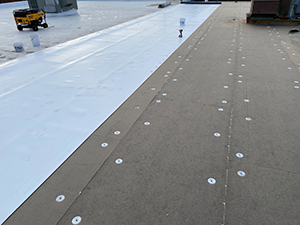
For low-slope commercial buildings, Cosam works with single-ply roofing systems that include TPO, PVC, and EPDM. Each system has different installation details and project considerations, so the replacement proposal should identify the membrane being recommended rather than referring only to a generic new roof.
The best fit depends on the existing roof assembly, building use, roof configuration, drainage, insulation goals, rooftop equipment, budget, and other project conditions. Cosam’s new roof installation information for Marion also identifies TPO, PVC, and EPDM as commercial single-ply options used on low-slope buildings.
If metal roofing is being considered, that should be evaluated as a separate system decision. This article focuses on general commercial replacement planning and membrane-roof budgeting rather than duplicating Cosam’s metal-specific replacement guidance.
What Affects Commercial Roof Replacement Cost?
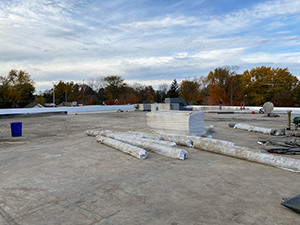
Commercial roof replacement cost depends on the actual work required to remove or prepare the existing system and install the new one. Important scope factors include:
- Roof size and layout: Larger roofs and roofs with several levels, curbs, penetrations, or equipment generally require more labor and detailing.
- Existing roof condition: The amount of tear-off, preparation, and corrective work depends on what is found during inspection and removal.
- Selected roofing system: The membrane, attachment method, flashing details, and related components affect material and labor requirements.
- Access and staging: Building access, equipment placement, loading areas, occupied spaces, and operational constraints can affect project planning.
- Insulation scope: Existing insulation condition and any approved insulation changes can alter both material quantities and labor.
- Deck condition: Deteriorated or unsuitable decking discovered during tear-off can require additional repair or replacement before the new roof is installed.
Why Deck and Insulation Allowances Matter
Some conditions cannot be fully confirmed until existing roofing materials are removed. A proposal can address that uncertainty by explaining how deck repairs, insulation replacement, or other concealed conditions will be documented and priced if they are discovered.
A deck allowance does not mean the deck is already known to be damaged. It creates a process for handling deterioration if it is found. The same principle applies to insulation. The estimate should distinguish the base replacement scope from approved additional work so the owner knows what is included and what could change the final price.
Compare Replacement Scope, Not Just the Total Price
Two proposals can show similar totals while covering different work. A useful commercial roof replacement estimate should identify the roof area, proposed system, removal or preparation, insulation assumptions, flashing and penetration work, drainage-related items when applicable, cleanup, exclusions, and the process for approving scope changes.
It should also explain how work will be coordinated around normal building operations. The goal is to understand what the contractor is actually providing, not simply choose the lowest number without comparing the underlying scope.
Commercial Roof Replacement in Marion, OH
Cosam’s current Marion commercial roofing page confirms that roof replacement remains part of its local commercial service offering. For a Marion facility, the replacement decision should connect the inspection findings to the chosen roof system, deck and insulation assumptions, and a written scope that explains what can change after tear-off begins.
Call Cosam Contracting at (419) 492-2201 to discuss commercial roof replacement in Marion, OH.
Frequently Asked Questions
What membrane options can be considered for a commercial roof replacement?
Cosam’s approved commercial single-ply services include TPO, PVC, and EPDM. The appropriate system depends on the building, existing roof assembly, roof configuration, and project goals.
Does a deck repair allowance mean the roof deck is already damaged?
No. It provides a defined way to handle damaged or unsuitable decking if it is discovered after the existing roofing is removed.
Can a commercial roof be repaired instead of replaced?
Yes, when the defect is localized and the surrounding roof remains suitable for repair. The inspection should explain why repair, restoration, or replacement best fits the condition found.
What should I compare between commercial roof replacement estimates?
Compare the roofing system, preparation or tear-off, insulation and deck assumptions, flashing details, access planning, exclusions, cleanup, and the process for approving scope changes.